


Philadelphia BRRRR Method Case Study: Building Equity with a Women’s Real Estate Investment Group in 2026
Can you still achieve a “perfect” BRRRR in a market where the median home price has climbed to $290,000 and interest rates for investment properties often sit between 7.5% and 8.5%? Many women feel the weight of these numbers, especially when coupled with the fear of underestimating renovation costs or getting tangled in the city’s complex L&I permit process. You aren’t alone in feeling that the barrier to entry is higher than ever. By connecting with a women’s real estate investment group Philadelphia, you gain access to a collective wisdom that turns these obstacles into strategic advantages.
This case study pulls back the curtain on a successful 2026 Philadelphia deal, offering you a transparent look at the exact numbers and neighborhood strategies required to build real equity. We will walk through the specific hurdles of the local market, including the critical transition to 2021 building codes this July and the impact of the 4.578% transfer tax. You’ll discover a repeatable framework that balances professional ambition with the reality of local regulations, giving you the confidence to execute your next deal with precision and support.
Key Takeaways
- Understand why the classic Philadelphia rowhome remains a premier asset for the BRRRR method in 2026, even within a shifting interest rate environment.
- Walk through the transparent timeline and financial breakdown of a $250,000 North Philly renovation to see exactly how equity is captured.
- Learn to navigate the “Philly Factor” by mastering L&I permit requirements, rental licensing, and the city’s latest lead paint certification standards.
- Discover how connecting with a women’s real estate investment group Philadelphia provides the collective wisdom and local resources needed to mitigate risk.
- Gain a repeatable framework for scaling your portfolio from a single unit to a multi-property legacy using professional mentorship and local community support.
The Philadelphia Real Estate Market: Why BRRRR is the Strategy for 2026
The BRRRR method (Buy, Rehab, Rent, Refinance, Repeat) remains a cornerstone of wealth creation, though 2026 demands a more disciplined approach than years past. With interest rates for investment properties currently ranging between 7.5% and 8.5%, the margin for error has narrowed. Success now requires a strategic shift from speculative appreciation to a model rooted in forced equity and sustainable cash flow. You’re no longer just buying a property; you’re engineering a financial engine. Philadelphia is uniquely positioned for this transition because of its high inventory of distressed rowhomes, which increased by nearly 10% year-over-year as of April 2026. This surplus provides you with the negotiating power necessary to secure deals that still make sense in a high-interest environment.
Philly’s architectural consistency is a secret weapon for women investors. The classic rowhome offers a predictable renovation template that allows for scalable systems and reliable contractor bids. Navigating these local nuances is easier when you aren’t doing it alone. Joining a real estate investment group provides the shared wisdom needed to avoid common pitfalls like underestimating the 4.578% real estate transfer tax. A women’s real estate investment group Philadelphia fosters an environment where professional ambition meets collective support, ensuring you have the resources to turn a distressed asset into a high-performing rental. It’s about moving away from transactional isolation toward a community-driven path to financial independence.
The ‘Path of Progress’: Top Philly Neighborhoods for BRRRR
Identifying the “next block” in 2026 requires a focus on transit-oriented development and proximity to major employment hubs. Brewerytown remains a strong contender for those looking to capitalize on proximity to Fairmount Park and the Art Museum district. Meanwhile, pockets of South Philly and Kensington offer significant opportunities for forced appreciation near SEPTA transit lines. You’ll find the best value by targeting blocks that are three to five minutes from a subway or trolley station. These areas attract a stable tenant base, which is vital when the average rent in the city has climbed to $1,806. Success in these sub-markets isn’t about chasing the peak of gentrification; it’s about finding the steady, reliable growth that supports long-term legacy building.
Balancing Cash Flow and Equity in a High-Interest Environment
Cash flow is the heartbeat of your 2026 portfolio. While the median home sale price sits at $290,000, smart investors are focusing on B-class neighborhoods where the 1% rule can still be achieved through strategic renovations. Forced equity is your primary defense against higher borrowing costs. You must also stay ahead of the “Philly Factor,” including the transition to 2021 building codes this July. Utilizing the Homestead Exemption can save you over $1,119 annually on primary residences, but for investment deals, the focus remains on the 1.3998% property tax rate and efficient rehab timelines. By prioritizing properties with the potential for a 1.5-bath conversion or finished basements, you create the value necessary to successfully refinance and pull your initial capital back out for the next deal.
Anatomy of a Philadelphia BRRRR: A $250k Rowhome Case Study
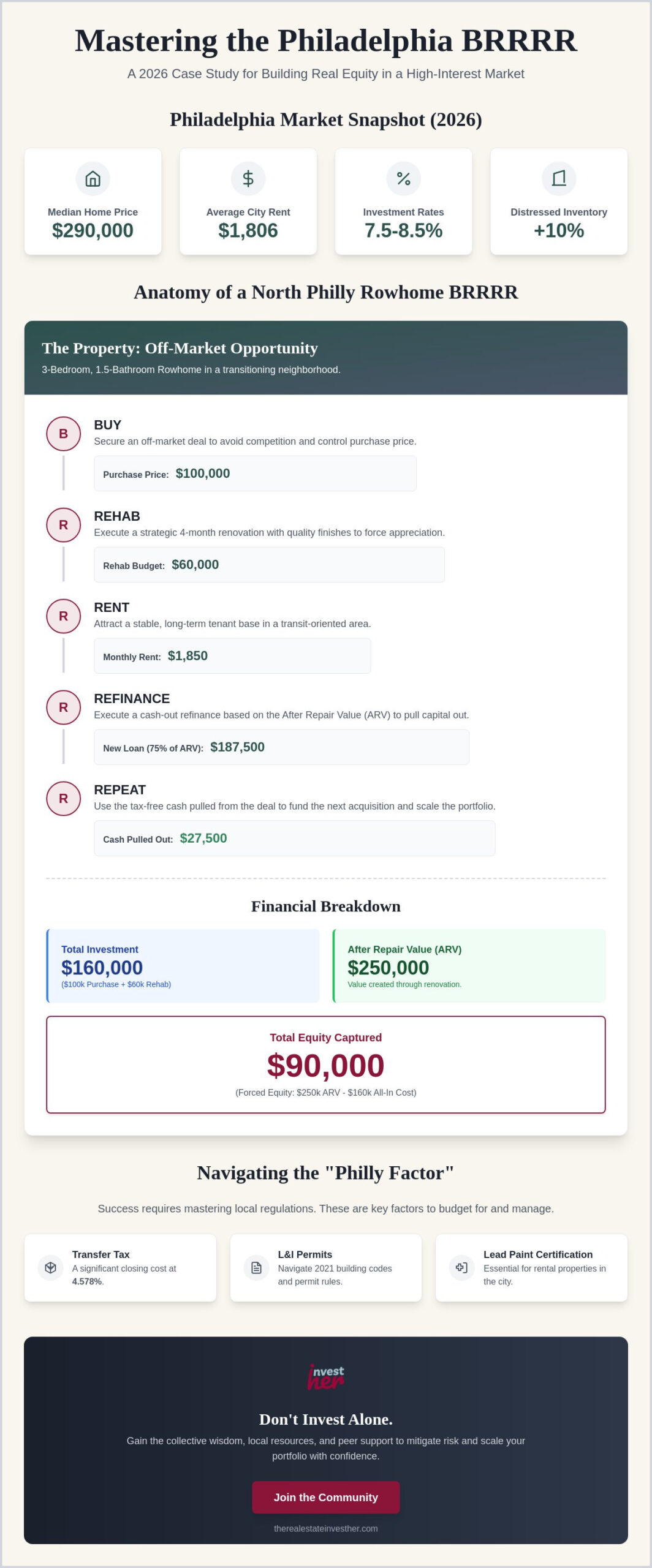
Real estate investing is rarely a straight line. It’s a journey of calculated risks and community support. This case study focuses on a 3-bedroom, 1.5-bathroom rowhome located in a transitioning North Philadelphia pocket, a property that perfectly illustrates the balance between professional strategy and personal resilience. Through the collective resources of a women’s real estate investment group Philadelphia, this particular off-market opportunity surfaced, allowing for a deal that bypassed the high competition of the traditional MLS. The goal was clear: execute a full BRRRR within a six-month window while maintaining a focus on high-quality finishes that attract long-term tenants.
The four-month rehab phase is often where investors feel the most pressure. Managing contractors while navigating the city’s L&I requirements requires a steadfast mindset. You’ll likely face unexpected delays or minor budget variances. Staying grounded in your “why” and leaning on a network of peers helps transform that stress into a learning opportunity. While we projected a 12-week timeline, the reality was 16 weeks due to mechanical upgrades. However, because the initial purchase was secured at the right price, this variance didn’t jeopardize the deal’s overall health.
The Purchase and Rehab: Numbers You Need to Know
Securing the property at $120,000 was the first win. This was an off-market deal found through local networking, proving that who you know is just as important as what you know. The rehab budget was set at $65,000, specifically targeting modern kitchens, updated bathrooms, and essential mechanical systems to ensure long-term durability. To ensure a safe equity cushion, the 70% Rule dictates that your total investment in purchase and rehab should not exceed 70% of the property’s $250,000 after-repair value. By adhering closely to this framework, we protected the project from the shifting dynamics of the 2026 market.
The Rent and Refi: Achieving the ‘Infinite Return’
Once the dust settled, the property was listed for $1,850 per month, slightly above the city average of $1,806 due to the 1.5-bath configuration and premium finishes. When preparing for the appraisal, we cross-referenced data from Philadelphia’s Office of Property Assessment to ensure our tax expectations and valuations aligned with official city records. The appraisal hit our target of $250,000, allowing for a 75% LTV (Loan to Value) refinance. Despite current interest rates, the cash flow remains positive, and the initial capital was successfully returned to the investor’s pocket. Connecting with others who have walked this path at therealestateinvesther.com can provide the clarity needed to stay the course through your own first deal.
Navigating the ‘Philly Factor’: Taxes, Permits, and Local Regulations
Philadelphia has a reputation for being a tough regulatory environment. It’s a common objection among new investors who feel overwhelmed by the city’s administrative layers. However, the ‘Philly Factor’ isn’t an insurmountable wall; it’s a set of rules that reward those who prepare with diligence and local insight. Understanding how to navigate these barriers for women investing in real estate is often the difference between a stalled project and a successful refinance. By leveraging the collective experience of a women’s real estate investment group Philadelphia, you can demystify the process of obtaining rental licenses and lead paint certifications, turning a potential hurdle into a standard operating procedure.
Your bottom line is also impacted by the Philadelphia City Wage Tax, which requires careful accounting if you have employees or specific income structures. Building a ‘Philly-Proof’ team is essential for managing these nuances. Your contractor must have deep local references and a history of working successfully within city limits. They should be familiar with the 1.3998% property tax rate and the 4.578% transfer tax, ensuring these costs are factored into every deal analysis. A team that understands the rhythm of Philadelphia’s government agencies will keep your project on track while others are stuck in red tape.
Working with L&I (Licenses and Inspections)
The Department of Licenses and Inspections (L&I) is the gatekeeper of your timeline. For minor cosmetic updates, you might qualify for “EZ permits,” which are issued quickly for specific scopes of work like roofing or simple equipment replacements. However, most BRRRR projects involving structural changes or the 1.5-bath additions discussed earlier require full building permits. To avoid a “Stop Work Order” that can freeze your capital for weeks, ensure your permits are posted correctly and your trade contractors are properly licensed in the city. Building a professional rapport with local inspectors as a woman investor isn’t just about compliance; it’s about establishing yourself as a serious, long-term contributor to the neighborhood’s revitalization.
Asset Protection for Philadelphia Real Estate Investors
Protecting your growing portfolio is just as vital as building it. An LLC is generally considered non-negotiable for Philly rowhome portfolios to shield your personal assets from property-specific liabilities. You can find more details on Asset Protection for Philadelphia Real Estate Investors to help you design a legal strategy that grows with you. Beyond the legal structure, pay close attention to your insurance nuances. Standard homeowner policies won’t cover a property during a major gut rehab. You need a specific builder’s risk or vacant property policy to protect against the unique risks of Philadelphia’s urban environment during those critical four months of construction.
The Refinance Reality: How to Exit Your Philly Deal with Maximum Equity
The refinance stage is the ultimate moment of truth for any BRRRR investor. It is the bridge between a successful renovation and the long-term wealth you are building for your legacy. In the 2026 Philadelphia market, this step requires more than just a clean credit report; it demands a proactive, professional approach to property valuation. You are not just waiting for a bank’s decision. You are presenting a business case for your property’s value. Leaning on the shared experiences of a women’s real estate investment group Philadelphia can help you identify the lenders who actually understand the nuances of a North Philly or Brewerytown block.
One of the most persistent myths in real estate is the mandatory six-month seasoning period. While many traditional banks still cling to this timeline, several 2026 lending products allow you to refinance much sooner if you can document significant forced appreciation. If you have done the work to transform a distressed rowhome into a premium rental, you shouldn’t have to wait to pull your capital back out. Speed is a competitive advantage. The faster you can recycle your initial investment, the faster you can move toward your next acquisition.
DSCR vs. Conventional Loans in 2026
Choosing the right loan product is a strategic decision that impacts your cash flow and scalability. Conventional mortgages currently hover around 7.5% for investment properties, but they come with strict debt-to-income requirements that can limit your growth. This is why Debt Service Coverage Ratio (DSCR) loans have become a favorite for Philly investors. DSCR loans prioritize property income over personal income, allowing you to qualify based on the $1,850 monthly rent rather than your personal W2 earnings. While the interest rates might be slightly higher than conventional options, the flexibility they offer for scaling a portfolio is unmatched.
Preparing for the Appraiser Walk-through
You cannot leave your appraisal to chance. Philadelphia blocks are famously inconsistent; one house might be a total gut-job while the neighbor is a $400,000 renovation. You must provide the appraiser with a comprehensive “Appraiser Package.” This should include a detailed list of improvements, copies of all L&I permits, and before-and-after photos that highlight the quality of your mechanical and cosmetic upgrades. Professional staging, even for a rental appraisal, can also influence the perceived value and help you hit that $250,000 ARV. If an appraisal comes in low, don’t panic. Use your network to find recent, relevant comps and file a formal rebuttal. To master these high-level negotiation tactics, join our community of expert investors and learn how to protect your equity at every turn.
Scaling Your Philadelphia Portfolio with the InvestHER Community
Scaling a real estate portfolio in a city as dynamic as Philadelphia requires more than just capital. It requires a fundamental shift in how you view your business and your network. Many high-achieving women find themselves hitting a ceiling because of “The Only Woman in the Room” syndrome, where a lack of relatable peers leads to second-guessing and stalled growth. You don’t have to navigate the transition from your first rowhome to a ten-unit portfolio alone. Engaging with a women’s real estate investment group Philadelphia allows you to trade isolation for intentionality. It’s about building a legacy that prioritizes both financial independence and personal well-being.
When you’re ready to move beyond the single-family BRRRR model, the city’s multifamily market offers a path to greater efficiency. With approximately 7,000 new units projected for completion in 2026, the competition is real, but so is the opportunity for those with the right connections. Off-market deals often start as conversations between trusted partners within our community. This shared wisdom is the catalyst that helps you pivot from managing a project to leading a portfolio, especially when you’re active in a women’s real estate investment group Philadelphia.
Building Your Local Power Team
A scalable business is only as strong as the people supporting it. Finding investor-friendly agents and lenders who understand the 2026 market dynamics is crucial for your long-term success. Through Building a Supportive Investor Community in Philadelphia, you gain direct access to vetted professionals who speak the language of BRRRR. Whether you’re seeking a private lender for your next acquisition or a contractor who understands the July 2026 building code changes, your network provides the answers. Attending the InvestHER CON 2026 is an excellent way to solidify these relationships and find the partners who will help you reach your next milestone.
The STRIVE Mentorship: Your Path to Financial Independence
Strategic knowledge is the most effective antidote to fear. The STRIVE Mentorship Program is designed to help you move from tactical execution to high-level portfolio management. It provides the framework to scale from your first property to a robust collection of Philadelphia assets without sacrificing your quality of life. By accessing this level of mentorship, you ensure that every deal you touch is aligned with your greater purpose and financial goals. Now is the time to invest in your own growth and secure your place in a community that values your excellence. Join the STRIVE Mentorship Program today and start building the legacy you deserve.
Your Path to a Philadelphia Legacy Starts Here
Building equity through the BRRRR method in Philadelphia is a journey that requires both technical precision and a supportive network. You’ve seen how mastering local hurdles like L&I permits and the city’s specific tax structure can turn a distressed rowhome into a high-performing asset. By connecting with a women’s real estate investment group Philadelphia, you ensure that you aren’t navigating these complex regulations in isolation. It’s about more than just the numbers. It’s about the collective wisdom that helps you avoid common pitfalls and secure your financial future.
Whether you’re looking to scale your portfolio through the STRIVE Mentorship Program or find your next partner at the annual InvestHER CON, our dedicated local chapter is here to support your growth. You have the tools, the framework, and the ambition to succeed. Now, take the next step toward the autonomy and alignment you deserve. Join the InvestHER Community and Scale Your Philly Portfolio today. Your vision for a prosperous real estate legacy is within reach, and we’re honored to walk beside you.
Frequently Asked Questions
Is the BRRRR method still profitable in Philadelphia in 2026?
Yes, the BRRRR method remains profitable in Philadelphia in 2026, provided you prioritize forced appreciation over market speculation. With median home prices at $290,000 and average rents climbing to $1,806, the spread for cash flow exists for those who buy right. Success now requires a disciplined approach to renovation costs and a deep understanding of neighborhood specific demand to offset current interest rates. Focused investors are finding the best returns in B class neighborhoods.
How much cash do I really need to start a BRRRR in Philly?
You generally need between $40,000 and $60,000 to initiate a standard rowhome BRRRR in a transitioning neighborhood. This amount covers a 20% down payment on a distressed asset and a portion of the initial rehab costs before your first refinance. Connecting with a women’s real estate investment group Philadelphia can help you find creative financing partners or private lenders who might offer more flexible entry points for your first deal.
What is the ‘seasoning period’ for a cash-out refinance in Pennsylvania?
Most conventional lenders in Pennsylvania still require a six month seasoning period before allowing a cash out refinance based on the new appraised value. However; certain DSCR and portfolio lenders in the 2026 market offer “no seasoning” products that allow you to exit much faster. Always verify these terms during your initial due diligence to ensure your capital isn’t locked up longer than your specific exit strategy allows.
How do I find reliable contractors for a Philadelphia rehab?
The most reliable way to find contractors is through direct referrals from active local investors who have recently completed similar projects. Avoid hiring based on online reviews alone. Instead; attend local meetups or leverage a women’s real estate investment group Philadelphia to find professionals who are already familiar with the city’s L&I permit process and the specific challenges of historic rowhome renovations. Vetted contractors save you both time and equity.
What are the best zip codes for BRRRR in Philadelphia right now?
Strategic investors are currently focusing on zip codes like 19121 in Brewerytown and 19134 in Kensington for a high inventory of distressed assets. South Philadelphia pockets in 19145 and 19148 also offer strong rental demand due to their proximity to transit and employment hubs. These areas provide the best balance of entry level pricing and the potential for significant forced equity through smart cosmetic and mechanical upgrades.
Can I use the BRRRR method for multi-family properties in Philly?
Yes, applying the BRRRR method to small multi family properties of two to four units is an excellent strategy for scaling your portfolio quickly in Philadelphia. While the initial purchase price and rehab budget will be higher; the combined rental income often provides a stronger debt service coverage ratio for your refinance. This approach allows you to build a larger unit count with fewer individual transactions, accelerating your path to financial independence.
What happens if the appraisal comes in lower than my ARV?
If your appraisal comes in lower than the projected ARV, your first step should be a formal rebuttal supported by recent; hyper local comps. If the value still doesn’t hit your target, you may need to leave some initial capital in the deal or pivot to a higher interest DSCR loan that accepts a lower equity position. This scenario highlights the importance of having a conservative “Plan B” during your initial deal analysis.
Do I need to live in Philadelphia to do a BRRRR deal there?
You don’t need to be a Philadelphia resident to execute a successful BRRRR deal, but you do need a trusted local power team. Remote investors must have a reliable project manager and a contractor who understands the city’s unique regulatory landscape. Building these connections is much easier when you are part of a supportive community that can provide local oversight and vetted professional recommendations to protect your investment.

Article by
Andresa Guidelli
Real estate investor, operator, and founder of The Real Estate InvestHER, a national platform supporting women real estate investors. With 15+ years of experience in real estate investing and business operations, she focuses on helping investors build stronger businesses behind their portfolios through better systems, clearer decision-making, leadership, and responsible use of AI.
Be the first to comment