


The Ultimate Checklist: Hidden Costs of Buying a Rental Property in 2026
Your biggest financial risk isn’t the mortgage payment you see on paper; it’s the invisible expenses that wait until after you’ve signed the deed to reveal themselves. Many investors find that the hidden costs of buying a rental property are what ultimately dictate their long-term success or failure. You’ve likely spent hours refining your spreadsheets while wondering if your math truly holds up. It’s natural to feel a knot of uncertainty when facing the shifting tax landscapes in Austin or new local regulations in Orlando. You want more than just a house; you’re building a legacy of autonomy and intentional growth through predictable cash flow.
We understand that true confidence comes from seeing the full picture before you pull the trigger on a deal. This guide will help you master your pro-forma by identifying the specific expenses that often sink otherwise promising investments. We’ll explore the subtle lifecycle costs and regional variables that most investors overlook. By the time you finish this checklist, you’ll have the strategic wisdom to transform a “maybe” into a bulletproof addition to your portfolio. It’s time to replace fear with a clear, actionable path toward financial independence.
Key Takeaways
- Identify the hidden costs of buying a rental property during the acquisition phase by budgeting for specialized inspections that standard reports often miss.
- Navigate the “Tax Trap” and regional insurance spikes to ensure your 2026 cash flow isn’t wiped out by post-purchase reassessments.
- Learn the “Square Footage Rule” for budgeting capital expenditures so you can distinguish between minor repairs and the silent cash flow killers.
- Uncover the property management junk fees and legal protection gaps that can erode your monthly income if they aren’t negotiated upfront.
- Gain the confidence to pull the trigger on a deal by building a conservative pro-forma that prioritizes long-term financial independence.
The Acquisition Phase: Hidden Costs Before You Close
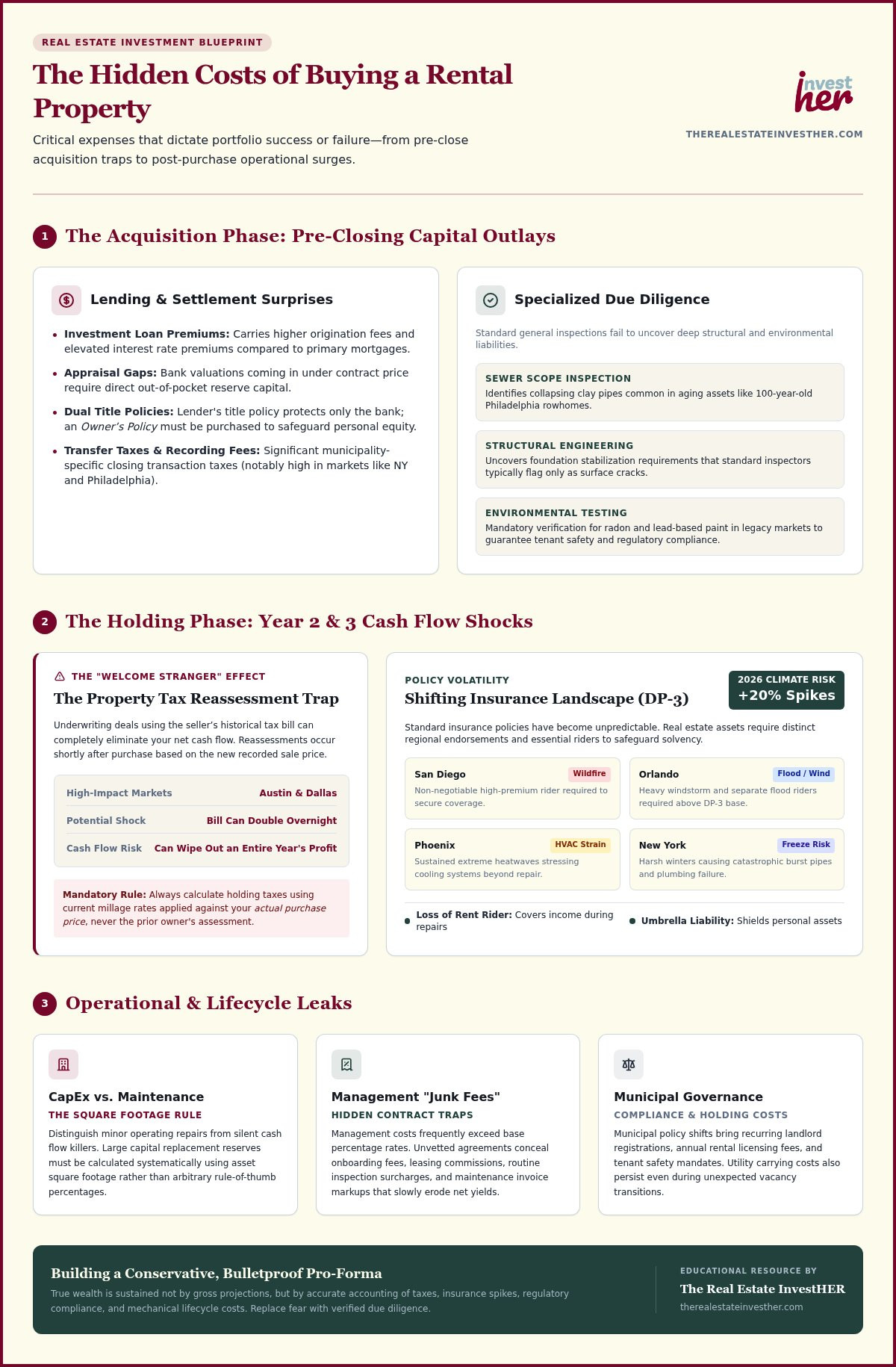
The purchase price on your contract is a starting point, not a destination. While most buyers anticipate standard closing costs, the hidden costs of buying a rental property often surface during the high-stakes window of due diligence. You aren’t just buying a building; you’re acquiring a business asset that requires a rigorous vetting process. Standard estimates often overlook the “investor-only” expenses that protect your long-term cash flow and peace of mind.
Investment-grade loans carry higher origination fees and interest rate premiums compared to primary residences. These costs, combined with appraisal gaps where the bank values the property lower than your purchase price, can significantly increase your initial capital outlay. You need a strategy that accounts for these lender fees before they deplete your reserves. This is where professional guidance becomes vital. Our STRIVE Mentorship Program acts as your due diligence partner, helping you spot these financial hurdles before you commit to a deal.
Advanced Due Diligence Inspections
A general home inspection provides a surface-level overview, but it rarely goes deep enough for sophisticated investors. If you’re looking at a 100-year-old Philly rowhome, a standard report won’t tell you if the clay sewer pipe is collapsing or if the foundation requires structural stabilization. Investing in a sewer scope or a structural engineering report might feel like an extra burden, but it often saves tens of thousands in future capital expenditures that could have been negotiated off the sale price. Environmental testing is another overlooked layer. In older markets, testing for radon or lead-based paint is essential for both tenant safety and legal compliance.
Lending and Title Surprises
Lenders view rental properties as higher risk. This translates to points and higher premiums that don’t always appear in the initial quote. You should also distinguish between a lender’s title policy and an owner’s policy. While the lender requires the former to protect their interest, the owner’s policy is what protects your equity from historical claims. Local regulations add another layer of complexity. If you’re investing in New York or Philadelphia, you must account for specific recording fees and local transfer taxes that vary by municipality. These aren’t just line items; they’re the foundational costs of doing business. Understanding these nuances early ensures your pro-forma remains a tool for growth rather than a source of stress.
The Holding Phase: Operating Expenses That Sneak Up
After you’ve accounted for the mortgage closing fees and settlement charges during the acquisition phase, it’s tempting to think the financial heavy lifting is over. However, the true hidden costs of buying a rental property often wait in the shadows of the second and third year of ownership. These operating expenses don’t just nibble at your cash flow; they can swallow it whole if you’ve based your pro-forma on historical data rather than future realities.
Property Tax Reassessments
One of the most dangerous oversights is the “Tax Trap.” In high-growth markets like Austin and Dallas, properties are often reassessed shortly after a sale, reflecting the new purchase price rather than the seller’s outdated valuation. This “Welcome Stranger” effect can result in a tax bill that doubles overnight. You must budget for the future tax liability based on the current millage rate and your purchase price, not what the previous owner paid. Failing to do so can wipe out an entire year’s profit in a single tax cycle.
The Shifting Insurance Landscape
Insurance premiums are no longer a static line item. Standard DP-3 policies are seeing significant volatility, with some areas experiencing 20% spikes in 2026 due to increased climate risks. If you’re investing in San Diego, wildfire coverage is a non-negotiable premium. Conversely, an Orlando property requires robust flood and windstorm riders. Beyond basic coverage, you need specialized riders for loss of rent and umbrella liability to protect your personal assets. A Phoenix heatwave can stress HVAC systems beyond repair, while a New York winter might cause catastrophic pipe bursts. These regional nuances require a proactive approach to coverage.
Administering a rental property involves more than just collecting checks. Many cities now mandate annual registration and licensing fees that can fluctuate based on local policy changes. Utility companies also pose a threat; even if a unit is vacant, you may be responsible for base charges that keep the systems running. In multi-family buildings, shared services like trash collection or common area lighting often fall on the landlord. These expenses are small individually but collectively represent the hidden costs of buying a rental property that many new investors ignore. Joining a supportive community can provide the localized insight needed to budget for these line items accurately.
Maintenance vs. CapEx: The Silent Cash Flow Killers
True cash flow isn’t just what remains after the mortgage payment; it’s what survives the inevitable physical lifecycle of your building. Many investors find that the hidden costs of buying a rental property are most painful when they confuse routine maintenance with capital expenditures. A $200 plumbing repair is a nuisance, but a $12,000 roof replacement is a structural event that can wipe out years of profit if you haven’t planned for it. Distinguishing between these two categories is the difference between a struggling landlord and a strategic asset manager.
While many rely on the “Percent Rule,” allocating a flat 10% of gross rent for repairs, this often falls short in lower-rent markets. The “Square Footage Rule” provides a more realistic baseline because the cost of materials and labor doesn’t decrease just because your rent is lower. You must also account for deferred maintenance. The previous owner’s neglect is a financial debt you inherit at closing. Identifying these lingering issues during your walkthrough is essential to protecting your initial capital.
Budgeting for Big Ticket Items (CapEx)
Major systems like HVAC units, water heaters, and roofs shouldn’t be financial surprises. We recommend creating a lifecycle schedule that estimates the remaining useful life of every major component. By utilizing a “Sinking Fund” approach, you set aside a monthly amount specifically for these long-term replacements. This ensures that when a system fails, the funds are already waiting. It’s also vital to consult the IRS residential rental property tax guidelines to understand how these capitalized improvements differ from deductible repairs. This distinction affects your tax liability and your long-term depreciation schedule.
The Reality of Tenant Turns
The “turn” is often where cash flow disappears. One month of vacancy is frequently your largest hidden expense, yet it rarely appears on a standard pro-forma. Beyond the lost rent, you face marketing costs, leasing commissions, and the physical requirements of refreshing the unit. Painting, deep cleaning, and flooring updates are standard, but you must also factor in safety compliance. Re-keying locks and updating smoke detectors are mandatory in most jurisdictions and add up quickly across a portfolio. Our InvestHER community helps members find reliable, vetted contractors to minimize these turn times and keep costs predictable. Strategic planning turns these “silent killers” into manageable line items in a bulletproof financial plan.
The ‘Human’ Costs: Management and Legal Protection
Real estate is fundamentally a people business. While the numbers on a spreadsheet often look clean, the humans involved in your investment introduce a layer of complexity that no algorithm can fully predict. These hidden costs of buying a rental property often stem from the administrative and legal frameworks required to protect your legacy. You aren’t just maintaining a building; you’re managing relationships and navigating a web of shifting regulations. Failing to account for the professional support needed to handle these interactions can leave you feeling overwhelmed and underfunded.
De-coding Property Management Agreements
Most investors focus solely on the base management percentage, which typically ranges from 8% to 10% of gross rent. This is a narrow view. You must look for the “junk” fees that erode your monthly profit. Lease renewal fees can cost hundreds of dollars for a simple signature. Some companies charge maintenance coordination surcharges, adding a 10% markup to every repair bill they handle. In high-regulation markets like New York, professional management is essential to avoid costly compliance errors, but you must know exactly what you’re paying for. Don’t forget the cost of your own time. Managing the manager is a job in itself. It requires consistent oversight and strategic intentionality.
Legal and Regulatory Compliance
Protecting your assets requires more than just a basic insurance policy. You’ll face annual LLC registration fees and the recurring costs of a registered agent to maintain your corporate veil. We also recommend building a dedicated “eviction fund.” This covers legal fees or “cash for keys” settlements if a tenant relationship fails. Fair Housing compliance is another critical area. Training and documentation costs are necessary to avoid catastrophic lawsuits that can arise from simple administrative mistakes. Finally, professional accounting for K-1s and 1099s ensures your tax strategy remains sound while saving you hours of frustration during tax season. This professional support is an investment in your personal well-being and long-term peace of mind.
Strategic growth depends on the quality of your network and the strength of your professional partners. You don’t have to navigate these complex agreements alone. Join the InvestHER Community Membership to connect with women who share vetted professional recommendations and real-world advice on avoiding management pitfalls. Surrounding yourself with collective wisdom is the most effective way to turn these human costs into a predictable part of your success story.
Strategic Planning: How to Account for the Unknown
Predictability is the foundation of financial independence. While the hidden costs of buying a rental property can feel like a series of financial ambushes, they’re actually manageable variables when viewed through a lens of strategic planning. You don’t need a crystal ball; you need a conservative pro-forma. By building a 15% buffer into your initial deal math, you transform potential disasters into anticipated line items. This intentional padding protects your personal well-being and ensures your cash flow remains resilient even when a furnace fails or a tax reassessment hits. Most importantly, you should recognize that many of these expenses eventually shift from liabilities to tax-deductible advantages when you follow professional guidelines.
Leveraging the InvestHER Community
Success in real estate isn’t a solo pursuit. It’s a collective journey. When you’re vetting vendor costs in Scottsdale or Phoenix, you shouldn’t have to guess if a quote is fair. Our localized community meetups allow you to find vetted, cost-effective contractors through the shared experiences of other women investors. Sharing real-world expense data across cities like San Diego and Philly turns individual hurdles into community wisdom. This transparency helps you avoid the “rookie tax” that often drains the reserves of first-time buyers. Our community members act as a living database of local market nuances, ensuring you never have to navigate a new regulation or a repair spike alone.
Next Steps for Your 2026 Portfolio
As you look toward expanding your portfolio, your first priority should be a rigorous stress test of your current potential deals. Ask yourself how a vacancy or a 20% insurance spike would impact your lifestyle. This level of advanced deal analysis is exactly what we cover in our workshops at InvestHER CON 2026. Attending this event is more than just a networking opportunity; it’s a vital investment in your due diligence process. If you’re ready to move beyond the fear of the unknown, you need a partner to help you spot the details that others miss. Join the STRIVE Mentorship Program to master your deal math and gain the confidence to pull the trigger on your next high-performing asset. Your journey toward predictable, sustainable wealth starts with a bulletproof plan.
Building Your Legacy with Clarity and Confidence
Mastering your real estate math requires looking far beyond the initial purchase price to the actual lifecycle of your asset. We’ve explored how acquisition fees, shifting tax landscapes, and management markups can quietly erode your returns if left unchecked. By building a conservative pro-forma and distinguishing between routine repairs and long-term improvements, you transform potential surprises into manageable strategic steps. Navigating the hidden costs of buying a rental property is much simpler when you leverage the collective wisdom of a community that has already walked the path.
True financial independence isn’t just about owning property; it’s about owning your time and peace of mind. You don’t have to vet every contractor or analyze every deal in isolation. Join 1,000+ women investors at our upcoming event to participate in expert-led workshops on financial modeling and network with local pros from Scottsdale to New York. Secure your InvestHER CON 2026 Ticket and master your investment strategy today. You have the vision and the drive to succeed. Now, surround yourself with the tools and the people who will help you scale with confidence.
Frequently Asked Questions
What is the most commonly overlooked hidden cost for new rental investors?
The most frequently overlooked expense is the cost of tenant turnover, which includes lost rent during vacancy and the physical refresh of the unit. New investors often underestimate the cumulative price of painting, deep cleaning, and re-keying between leases. These expenses can erode an entire year’s cash flow if not budgeted upfront. Our InvestHER Community Membership helps members share real-world data to ensure these turn costs are accurately reflected in their initial pro-formas.
How much should I realistically set aside for CapEx every month?
You should typically allocate between 5% and 10% of your gross monthly rent toward capital expenditures, though older properties in cities like Philadelphia or New York may require more. A more precise method is the “Square Footage Rule,” which accounts for material costs regardless of rent levels. Setting these funds aside in a dedicated sinking fund ensures that major replacements, such as a roof or HVAC system, don’t become financial emergencies that derail your progress.
Are property management fees tax-deductible?
Yes, property management fees are generally considered a deductible operating expense under federal tax guidelines. This includes the base monthly percentage and additional “junk” fees like lease renewal or maintenance coordination surcharges. While we don’t provide specific tax advice, professional bookkeeping is essential to track these costs accurately. Many of our STRIVE Mentorship participants work with specialized accountants to ensure every management-related expense is properly documented to maximize their tax-deductible advantages each year.
How do property tax reassessments work after I buy a property in Texas?
In Texas markets like Austin and Dallas, properties are typically reassessed at their current market value shortly after a sale occurs. This often results in a significant tax spike if the previous owner held the property for a long time at a lower valuation. You should always calculate your pro-forma based on the purchase price and local millage rate rather than the seller’s current bill. This proactive approach prevents the “Welcome Stranger” effect from wiping out your expected cash flow.
What is the difference between a repair and a capital improvement for tax purposes?
A repair is generally defined as work that restores a property to its original condition, such as fixing a leaky faucet, and is typically deductible in the year it occurs. A capital improvement adds significant value or extends the building’s useful life, like installing a new HVAC system in Phoenix. These improvements must be capitalized and depreciated over several years. Understanding this distinction is vital for mastering the hidden costs of buying a rental property and optimizing your long-term tax strategy.
Should I include the cost of my own time in my rental property pro-forma?
Yes, accounting for your own time is a critical step in determining if your investment is truly passive. Even if you don’t pay yourself a literal wage, you should track the hours spent managing the manager or overseeing renovations. If the property requires twenty hours of your labor each month to remain profitable, your actual return on investment is lower than it appears on paper. Valuing your time helps you decide when it’s strategic to scale or pivot.
How can I find reliable local contractors to avoid overpaying for maintenance?
The most effective way to find reliable contractors is through vetted referrals from other active investors in your local market. In cities like San Diego or Orlando, the InvestHER Community Membership provides a platform for women to share their trusted vendor lists and negotiate better rates. Relying on community-vetted professionals helps you avoid the “rookie tax” of overpaying for sub-par work. Building a network of dependable partners is essential for maintaining predictable maintenance costs as you scale your portfolio.
Is it worth paying for a sewer scope during the inspection period?
Investing in a sewer scope is almost always worth the initial expense, particularly for older properties in markets like Philadelphia or Dallas. A standard home inspection won’t reveal a collapsing clay pipe or invasive root systems that can cost over $10,000 to repair. Spending a few hundred dollars during your due diligence period can save you from a catastrophic capital expenditure shortly after closing. This small step is a hallmark of a sophisticated investor who prioritizes long-term financial stability and intentional growth.

Article by
Andresa Guidelli
Real estate investor, operator, and founder of The Real Estate InvestHER, a national platform supporting women real estate investors. With 15+ years of experience in real estate investing and business operations, she focuses on helping investors build stronger businesses behind their portfolios through better systems, clearer decision-making, leadership, and responsible use of AI.
Be the first to comment